Doctor: Climate Instability Shakes Mental Health
-
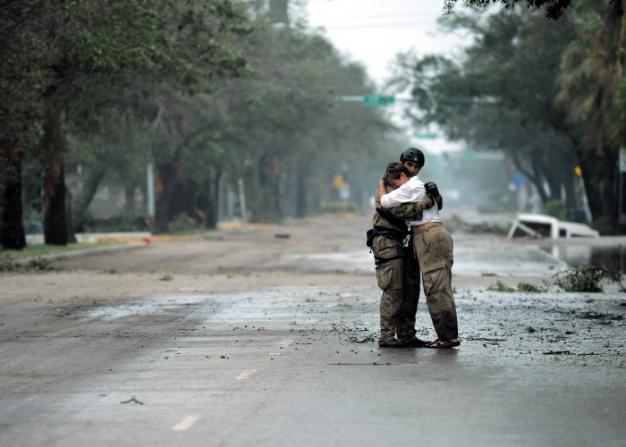
Emotional trauma can be tied to climate disruptions, says Dr. Steve Moffic. In this image, a US-Air Force Staff Sergeant receives a hug from a resident after Hurricane Ike, September 13, 2008. Photo: Staff Sgt. James L. Harper Jr.
August 1, 2014
For psychiatric doctor Steven Moffic, the health risks from climate instability and other abrupt environmental shifts include post-traumatic stress disorder, drug abuse, autism, and something called "solastalgia."
"It's sort of a corollary of nostalgia," Moffic says."But it's this kind of environmental grief where where you live gets changed, against your will, obviously. You can't leave, and you feel this sadness for what you've lost right in front of you...I think we're seeing that in Appalachia now with the coal mining—mountaintop stripping, the same kind of thing."
Moffic is a Professor of Psychiatry and Behavioral Medicine & Family and Community Psychiatry at the Medical College of Wisconsin. He was in Pittsburgh this week to join the Physicians for Social Responsibility in supporting the Environmental Protection Agency's proposed rules for cutting emissions from coal-fired power plants. The EPA's move is meant to curtail warming global temperatures.
And while many medical professionals have drawn connections between climate change and physical illnesses, research about mental health issues has not been as prominently reported.
"I think it's because mental health gets short-shrifted in health care generally, so it gets short-shrifted when we talk about climate change, too. You know, we don't have enough mental health care in the country," Moffic says. "But I think the mental health risks of continuing climate change are probably even more extensive than health. They potentially affect so many people."
Here are some of the studies that Moffic cites as "emerging climate change manifestations and their psychiatric implications."
- Linear increase in violence, especially in warm climates and the inner city
- Increase in alcohol and substance abuse
- Increase in attempted and completed suicides
- Increase in heat strokes from psychiatric medication side effects
- Post-traumatic Stress Disorders and other disorders increase after environmental disasters, more so if those traumas are felt to be manmade
- Climate refugees with added loss and cultural bereavement
- Group conflict and competition for resources
- New syndrome of solastalgia
- Mental problems from mountaintop removal coal mining in central Appalachia
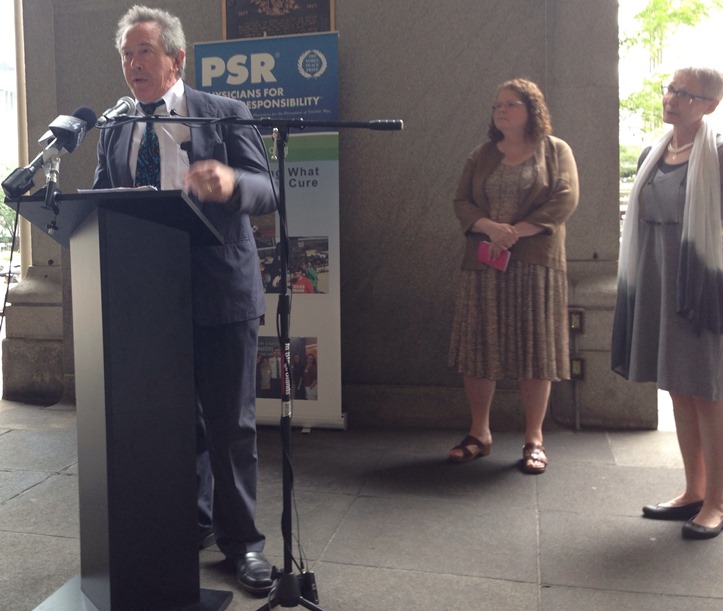
Image, second from top: Dr. Steven Moffic in front of Pittsburgh's City-County building, with other members of Physicians for Social Responsibility. Photo: J. Szweda Jordan.
This episode is part of a series entitled
Climate Chronicles
Stories of Climate Change from Pennsylvania

Jennifer Szweda Jordan
Jennifer is the former host and managing editor for The Allegheny Front.
Read more by Jennifer Szweda Jordan »Donate to The Allegheny Front
Help us continue delivering quality environmental radio by supporting us with a donation.